Motor level
- The body moves.
- Posture is maintained.
- Steps are coordinated.
- Space is crossed with precision.

Quadrato Motor Training trains attention and awareness, and the change can be measured in the brain.
Get more informationQuadrato Motor Training, or QMT, is a sensorimotor training technique, simple in form and profound in its effects. Presence is not just an idea: it is a faculty and, like a muscle, it can be developed through constant practice. QMT concretely demonstrates that awareness can be trained and made to grow.
Research and collaborations









With just a few minutes of practice a day, presence (which is not just an idea, but a trainable faculty) can produce measurable changes in the brain. A square drawn on the floor thus becomes a tool for transformation.
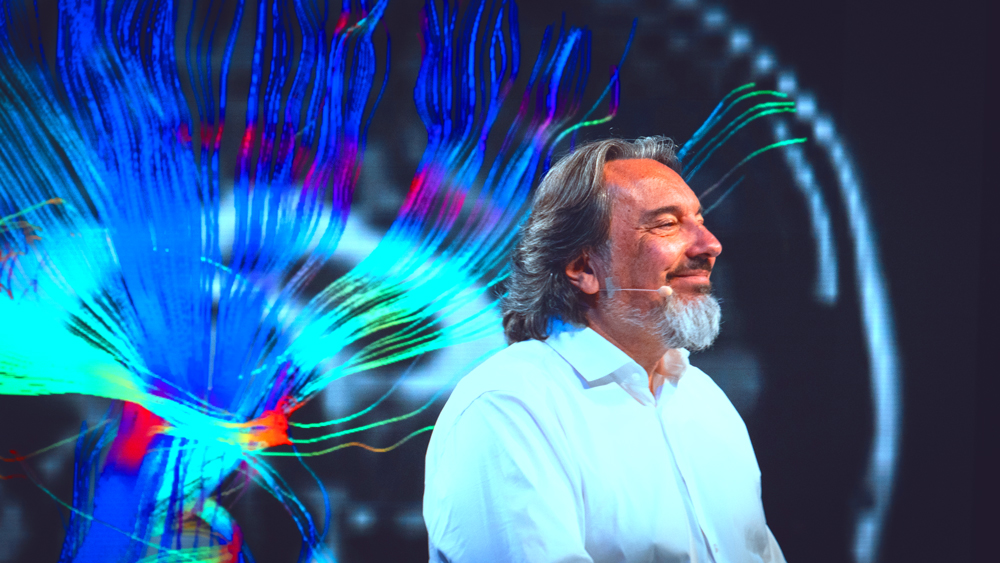
Quadrato Motor Training is a simple, concrete practice: it requires a square, four corners and a guiding voice.
QMT produces profound effects because it works on three levels at the same time: the body moves, attention stays alive, and the mind maps space and chooses the movement.
It is not only the sum of the three levels that counts, but their synchronisation: body, attention and cognition must work together. Body and mind function as a single unit.
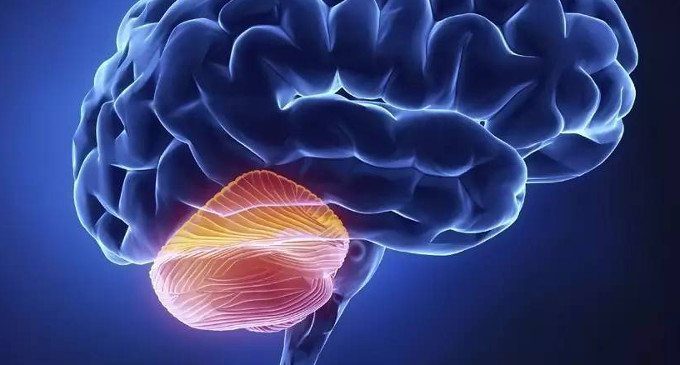
The cerebellum is probably one of the main directors of the process. In QMT it supports the reunification of what the body does and what the mind processes.
Quadrato Motor Training has been studied scientifically. The research, begun in 2003, was carried out by RINED, the Research Institute for Neuroscience, Education and Didactics, together with Bar-Ilan University, Sapienza University of Rome and the Italian CNR.
An important part of the work was led by Tal Dotan Ben-Soussan. The results were published in international scientific journals and show measurable effects on creativity, alpha waves, connectivity and neuroplasticity.
The practice trains attention, presence, flexibility and the capacity to choose.
QMT trains sustained attention and divided attention: you have to listen, decide and move at the same time. Attention is continually brought back to the present, training attentional continuity.
On the square you cannot be elsewhere. If the mind wanders, the step is wrong. The practice gently leads you to be here and now: every command calls you back to presence and every step confirms the need to be there.
Every command can change direction, so you have to adapt quickly: you cannot stiffen and you cannot anticipate too much. Flexibility becomes mental and bodily at once, because changing direction physically trains you to change it inwardly too.
Error is let go: it does not become a judgement, it does not interrupt the process and it does not block the action. QMT trains a freer relationship with failure, and it is a concrete form of resilience. The rule of error teaches us not to freeze and not to identify with the mistake.
The command arrives. There is an instant of processing and choice, in which the movement is decided. QMT makes this space physical: it is the passage from automatism to choice. The body learns not to react mechanically, and the person learns to respond with greater presence.
We often think we can change the mind with the mind alone. QMT shows that a direct path goes through the body: moving consciously can transform the way we think.
You don't need to be an athlete: you just need to want to try.
It is not mere gymnastics: the square becomes a mirror. What becomes visible becomes trainable, and the automatisms we observe can be transformed.
what becomes visible becomes trainable
The square shows:
Awareness does not remain a concept. It becomes training.
The brain can change at any age when it receives the right practice.